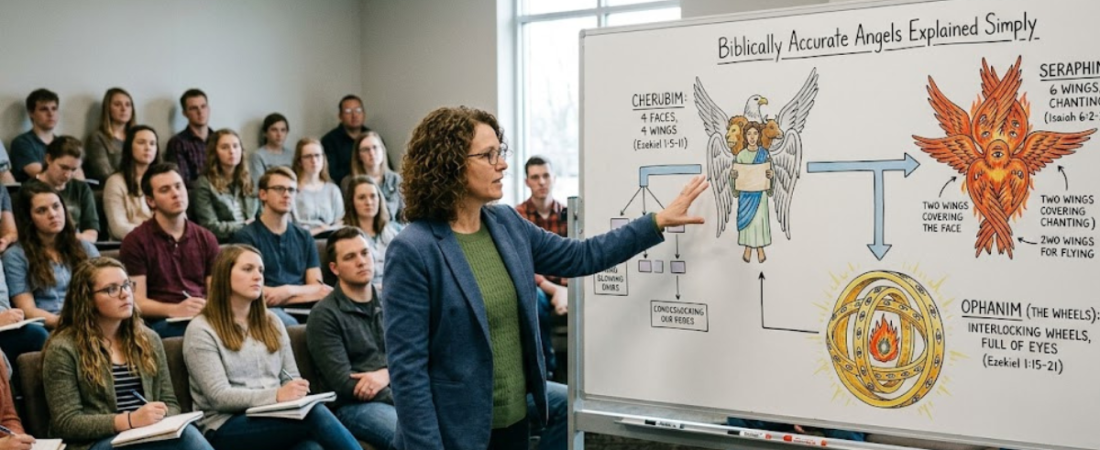
When most people imagine angels, they picture peaceful human-like figures with white robes and feathered wings. However, the Bible often describes heavenly beings in a far more mysterious and awe-inspiring way. Some appear covered in eyes, others have multiple faces and wings, and some are surrounded by fire and lightning.
In recent years, these unusual descriptions have sparked massive online interest. From digital art and animations to memes and tattoos, people have become fascinated with what scripture actually says about angels. Many are surprised to learn that biblical depictions differ greatly from the soft angel imagery commonly seen in paintings and holiday decorations.
This guide explores the appearance of angels in scripture, the major angelic beings mentioned in the Bible, and why these heavenly creatures often inspired fear and wonder.
What Are Biblically Accurate Angels?
The term “biblically accurate angels” refers to angels described directly in the Bible rather than the artistic versions popularized in modern culture. Scripture uses symbolic and visionary language to portray heavenly beings as powerful supernatural creatures that reflect the glory and majesty of God.
The phrase became especially popular online after people began comparing traditional angel art with dramatic biblical descriptions found in books like Ezekiel, Isaiah, and Revelation.
Some recurring characteristics include:
- Multiple wings
- Numerous eyes
- Brilliant light and fire
- Human and animal-like faces
- Wheels within wheels
- Thunderous or radiant appearances
These descriptions often leave readers wondering why heavenly beings appear so overwhelming or intimidating in scripture.
How Angels Appear in the Bible
Not every angelic being looked terrifying. In some passages, angels appeared as ordinary humans. In others, prophets witnessed majestic heavenly forms that were almost impossible to describe with human language.
Here are some of the best-known biblical depictions.
Seraphim
The seraphim appear in Isaiah 6 surrounding the throne of God. These heavenly beings possess six wings:
- Two wings cover their faces
- Two wings cover their feet
- Two wings are used for flying
They continually proclaim the holiness of God by crying, “Holy, holy, holy.”
The name “seraphim” is associated with burning or fiery beings, symbolizing purity, worship, and divine glory.
Cherubim
Cherubim are among the most misunderstood heavenly beings in scripture. Popular culture often portrays cherubs as tiny winged babies, but biblical descriptions are far more powerful and symbolic.
In Ezekiel’s visions, cherubim are described as having:
- Four faces
- Four wings
- Human-like hands
- Feet resembling polished bronze
- Faces resembling a man, lion, ox, and eagle
These beings are strongly connected with guarding sacred places, including the Garden of Eden and the Ark of the Covenant.
Ezekiel’s Vision of Wheels and Eyes
One of the most famous angelic visions appears in Ezekiel chapter 1. The prophet describes extraordinary heavenly creatures accompanied by intersecting wheels covered in eyes.
The vision includes:
- Wheels within wheels
- Eyes covering the wheels
- Lightning-like movement
- Fire flashing among living beings
This imagery has inspired countless artistic interpretations, fantasy designs, and online discussions because of its surreal and mysterious appearance.
Many theologians view the symbolism as representing divine knowledge, power, and God’s presence moving throughout creation.
Thrones and Other Heavenly Beings
Christian angelology also refers to beings known as Thrones. These are often associated with:
- Divine justice
- Cosmic authority
- Heavenly order
Some traditions connect them to the wheel imagery seen in Ezekiel’s vision.
Other heavenly beings mentioned in scripture include:
Archangels
Archangels are high-ranking heavenly messengers and warriors. Michael is the most widely recognized archangel in the Bible.
Living Creatures
The book of Revelation describes living creatures surrounding God’s throne in continuous worship. Their appearance closely resembles the beings seen in Ezekiel’s visions.
Messenger Angels
Some angels appeared human and directly interacted with people. Gabriel’s announcement to Mary is one of the most famous examples.
Main Types of Angels in Scripture
The Bible and theological tradition describe several categories of heavenly beings.
Major Angelic Groups
- Seraphim
- Cherubim
- Thrones
- Archangels
- Living Creatures
- Messenger Angels
- Guardian Angels (suggested in some passages)
Each group serves a unique role, from worship and protection to delivering divine messages.
Important Bible Passages About Angels
Several sections of scripture are central to understanding angelic imagery.
Key Biblical References
- Isaiah 6 — Seraphim surrounding God’s throne
- Ezekiel 1 — Wheels, eyes, and living creatures
- Ezekiel 10 — Additional cherubim visions
- Revelation 4 — Heavenly creatures worshiping continuously
- Daniel 10 — A radiant heavenly messenger
- Luke 1 — Gabriel appearing to Mary
Together, these passages create a complex and symbolic picture of the heavenly realm.
Why Do Angels Often Seem Frightening?
A common detail in scripture is that angels frequently begin encounters with the words “Fear not.”
People reacted with fear because angelic encounters often involved:
- Blinding light
- Supernatural power
- Majestic appearances
- Thunderous voices
- Overwhelming holiness
These beings represented direct contact with the divine realm, making fear a natural response.
The dramatic descriptions also emphasize that heaven is beyond ordinary human understanding.
Angels and Demons in Biblical Tradition
The Bible presents angels and demons as opposing spiritual beings. Demons are traditionally understood as fallen angels who rebelled against God.
Angels
- Serve God
- Deliver messages
- Protect people
- Carry out divine purposes
Demons
- Oppose God
- Deceive humanity
- Promote destruction
- Encourage evil
This contrast has influenced centuries of theology, literature, and artistic storytelling.
Why These Angels Became Popular Online
Interest in biblical angel imagery has grown rapidly online because the descriptions are visually unique and dramatically different from traditional religious art.
Popular trends include:
- Meme culture
- Surreal digital art
- Animated recreations
- Fantasy-inspired designs
- Horror-style interpretations
Many creators combine biblical symbolism with modern visual styles, making these heavenly beings a major internet phenomenon.
Angel-Inspired Art and Animation
Animations inspired by scripture often portray spinning wheels, glowing eyes, and massive celestial beings to recreate prophetic visions from the Bible.
Artists frequently explore themes such as:
- Cosmic imagery
- Fire and light
- Abstract geometry
- Celestial symbolism
- Massive wings and halos
These interpretations range from realistic religious art to highly abstract digital creations.
Tattoo and Costume Trends
Scripture-inspired angel imagery has also influenced modern tattoos and cosplay designs.
Popular Tattoo Concepts
- Six-winged seraphim
- Eye-covered wheels
- Multi-faced cherubim
- Minimalist heavenly symbols
- Verse-inspired artwork
Costume Ideas
Many convention and cosplay designs feature:
- Large layered wings
- Floating eye motifs
- Golden halos
- Multi-face masks
- Glowing accessories
These elaborate creations attempt to capture the awe-inspiring imagery described in prophetic visions.
The Viral Tree Topper Trend
One unexpected internet trend is the “biblically accurate” Christmas tree topper. Instead of a traditional angel figure, some people decorate their trees with surreal wheel-and-eye designs inspired by Ezekiel’s visions.
The trend blends humor, creativity, and genuine fascination with biblical symbolism.
Famous Angel Names in Religious Tradition
Only a few angels are specifically named in scripture or later religious tradition.
Well-Known Angel Names
- Michael — protector and warrior
- Gabriel — messenger
- Raphael — healer in some traditions
- Lucifer — connected with fallen angel traditions
Many heavenly beings remain unnamed in the Bible despite their important symbolic roles.
Do All Angels Look the Same?
No. Scripture presents a wide range of appearances.
Some angels appeared fully human and interacted naturally with people. Abraham, Lot, and Mary all encountered angels that looked human enough to hold conversations.
The more unusual descriptions usually appear in prophetic visions where people witness heavenly realities beyond normal human experience.
Frequently Asked Questions
What does the Bible say angels look like?
Descriptions vary greatly. Some appear human, while others have wings, multiple faces, eyes, fire, or radiant forms.
Which Bible chapter describes wheels covered in eyes?
Ezekiel chapter 1 contains the famous vision of wheels within wheels covered in eyes.
Why do angels say “Fear not”?
People were often terrified during angelic encounters because of the overwhelming glory and supernatural nature of these beings.
Are cherubim really baby angels?
No. Biblical cherubim are powerful heavenly beings with multiple faces and wings.
Are angels considered real in Christianity?
Most Christian traditions believe angels are real spiritual beings created by God, though interpretations of their appearance differ.
Why are these angel descriptions popular online?
Their strange and dramatic imagery inspires art, animation, memes, tattoos, and discussions about biblical symbolism.
Conclusion
The Bible presents angels as mysterious and awe-inspiring beings that reflect divine power, holiness, and glory. Far from the soft winged figures common in modern art, many scriptural descriptions involve fire, eyes, wings, radiant light, and overwhelming heavenly presence.
From the seraphim in Isaiah to Ezekiel’s famous wheel vision, these beings continue to inspire curiosity, creativity, and theological discussion around the world. Whether explored through scripture, art, or internet culture, biblical angel imagery remains one of the most fascinating subjects in religious history.