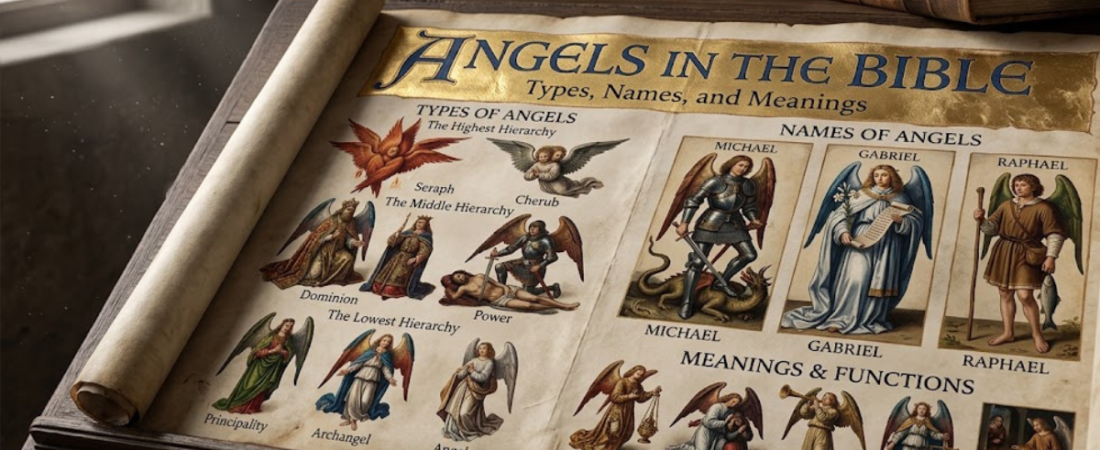
When most people think about angels in the Bible, they picture glowing figures with white robes and soft wings floating in the clouds. But the biblical description of angels is far more fascinating, mysterious, and powerful than popular culture suggests.
From fiery seraphim surrounding God’s throne to warrior angels delivering divine messages, they play a major role throughout Scripture. They appear in moments of judgment, protection, worship, prophecy, and spiritual warfare. Understanding what angels in the Bible really are helps readers better understand God’s power, purpose, and presence.
In this article, we’ll explore the different types of angels in the Bible, their appearance, names, duties, and the truth about fallen them. We’ll also answer some of the most searched questions people ask about heavenly beings.
What Are they in the Bible?
The word “angel” comes from the Greek word angelos, meaning “messenger.” In the Bible, they are spiritual beings created by God to serve His purposes. They are not humans who died and went to heaven, and they are not equal to God.
They appear throughout both the Old and New Testaments. Their responsibilities include:
- Delivering messages from God
- Protecting believers
- Carrying out divine judgment
- Worshiping God continuously
- Guiding and strengthening people
- Fighting spiritual battles
The Bible presents them as intelligent, powerful, and completely obedient to God.
Description of Angels in the Bible
One of the biggest surprises for readers is the actual description of angels in the Bible. Not every angel looked human, and some appearances were so overwhelming that people fell to the ground in fear.
Human-Like Angels
Some angels appeared as ordinary men. For example:
- The angels who visited Abraham looked human
- The angel at Jesus’ tomb appeared in bright clothing
- Gabriel appeared in a form that humans could understand
These angels often spoke directly with people and delivered important messages.
Seraphim Angels in the Bible
The seraphim are among the most awe-inspiring heavenly beings described in Scripture. In Isaiah 6, seraphim are shown surrounding God’s throne with six wings:
- Two wings covering their faces
- Two covering their feet
- Two used for flying
They constantly worship God, crying, “Holy, holy, holy.”
Description in the Bible Ezekiel
The prophet Ezekiel describes some of the most unusual angelic beings in the Bible. His vision includes creatures with:
- Four faces
- Four wings
- Human hands
- Wheels filled with eyes
- Bright fire and lightning
These beings are often identified as cherubim. Ezekiel’s account is symbolic, detailed, and unlike the soft angel imagery common today.
Types of Angels in the Bible
The Bible mentions several different types of angels, each with unique roles and responsibilities.
1. Cherubim
Cherubim are powerful heavenly beings connected with God’s holiness and presence.
They first appear guarding the Garden of Eden after Adam and Eve were expelled. They are also connected to the Ark of the Covenant and God’s throne.
Unlike cute baby cherubs in artwork, biblical cherubim are majestic and fearsome.
2. Seraphim
Seraphim are heavenly worshipers who remain near God’s throne. Their main role is worship and purification.
Isaiah’s vision shows them proclaiming God’s holiness continuously.
3. Archangels
The term “archangel” means chief angel. The Bible specifically names Michael as an archangel.
Michael appears as a spiritual warrior involved in heavenly battles and protection of God’s people.
Many people search for “arch angels in the Bible,” but Scripture only directly uses the singular term “archangel” for Michael.
4. Messenger Angels
Many unnamed angels in Scripture function as messengers. Gabriel is the clearest example.
He announced:
- The birth of John the Baptist
- The birth of Jesus
- Important prophetic visions
These angels communicate God’s plans to humanity.
Names of Angels in the Bible
Many people are curious about the names of angels in the Bible. Surprisingly, only a few angels are specifically named in canonical Scripture.
Michael
Michael is portrayed as a warrior angel and defender of God’s people. He appears in Daniel, Jude, and Revelation.
Gabriel
Gabriel serves as a messenger. He explains visions and announces miraculous births.
Lucifer
The name Lucifer is traditionally associated with Satan before his fall from heaven. Interpretations vary among scholars, but many Christians connect Isaiah 14 with the fall of Satan.
These are the most recognized named angels in the Bible.
Fallen Angels in the Bible
The subject of fallen angels in the Bible has fascinated readers for centuries.
Fallen angels are angels who rebelled against God and followed Satan. According to Christian tradition, Satan was once a high-ranking angel who became prideful and opposed God.
Revelation 12 symbolically describes a heavenly rebellion involving Satan and his angels.
How Many Fallen Angels in the Bible?
The Bible does not give an exact number. However, Revelation mentions a third of the stars being swept from heaven, which many interpret symbolically as fallen angels.
Because Scripture does not clearly state the number, many details remain uncertain.
Guardian Angels in the Bible
The idea of guardian angels in the Bible comes from passages suggesting angels protect and watch over people.
Psalm 91 says God commands His angels concerning believers. Jesus also spoke about them connected to children.
While the Bible never fully explains how guardian angels work, it strongly suggests angelic protection is real.
Angels in the Bible Appearance
The appearance of them in Scripture varies widely depending on their purpose and rank.
Descriptions include:
- Bright shining beings
- Men in white garments
- Winged heavenly creatures
- Fiery spiritual beings
- Multi-faced cherubim
One common detail appears repeatedly: people were often terrified when they appeared.
That’s why they frequently began conversations with the words, “Do not be afraid.”
Female Angels in the Bible
A common question is whether there are female angels in the Bible.
The Bible does not clearly identify angels as female. Most angels referred to in Scripture use masculine language or appear in male form when interacting with humans.
However, Zechariah 5 contains a symbolic vision involving winged women. Scholars debate whether these figures should be considered angels or symbolic representations.
Overall, the Bible does not specifically describe female angels in the traditional sense.
Who Are the 12 Angels in the Bible?
Many people search for “who are the 12 angels in the Bible,” but Scripture does not provide a list of twelve specific angels.
This idea may come from later traditions, apocryphal writings, or confusion with:
- The 12 tribes of Israel
- The 12 apostles
- Various angelic traditions outside the Bible
The canonical Bible only names a small number of angels directly.
Different Angels in the Bible and Their Roles
The different angels in the Bible serve distinct purposes.
Worship
Seraphim worship God constantly.
Protection
Cherubim guard sacred places and God’s holiness.
Messaging
Gabriel and messenger angels deliver divine revelations.
Warfare
Michael leads heavenly battles against evil.
Judgment
Some angels carry out God’s judgment on nations and individuals.
These different types of angels in the Bible reveal the complexity of the spiritual world described in Scripture.
Are Angels Still Active Today?
Many believers think they still work behind the scenes today.
While the Bible records dramatic angelic appearances mainly during key moments in salvation history, many Christians believe angels continue to:
- Protect
- Guide
- Encourage
- Serve God’s purposes invisibly
However, Scripture consistently warns people not to worship angels. Their role is always to point toward God, not themselves.
Misconceptions
Modern culture has created many myths about angels that don’t match Scripture.
Myth: Are Dead Humans
The Bible never teaches that humans become angels after death.
Myth: Always Have Wings
Some angels in the Bible have wings, but many appear completely human.
Myth: Are Cute and Harmless
Biblical angels are often overwhelming, powerful, and connected to divine authority.
Myth: Every Angel Has a Name
Only a few named angels in the Bible are identified directly.
Why Angels Matter in the Bible
Angels reveal important truths about God:
- His power
- His holiness
- His protection
- His justice
- His communication with humanity
Their presence throughout Scripture reminds believers that there is a spiritual reality beyond the physical world.
Rather than becoming obsessed with angels themselves, the Bible encourages readers to focus on the God they serve.
FAQs
What are angels in the Bible?
Angels are spiritual beings created by God to serve as messengers, protectors, worshipers, and warriors.
How many angels are named in the Bible?
The Bible directly names Michael and Gabriel. Lucifer is traditionally connected with Satan before his fall.
What do angels look like in the Bible?
Descriptions vary widely. Some appear human, while others have wings, multiple faces, fire, or shining light.
Are guardian angels biblical?
Several verses suggest angels protect believers, though the Bible does not fully explain guardian angels in detail.
Who is the most powerful angel?
Michael is often viewed as one of the most powerful angels because of his role in spiritual warfare.
Are fallen angels demons?
Many Christian traditions identify fallen angels as demons who rebelled against God.
Do angels have free will?
Yes. The existence of fallen angels suggests angels can choose obedience or rebellion.
Are there female angels in the Bible?
The Bible does not clearly identify angels as female, though symbolic female winged figures appear in Zechariah.
Conclusion
Angels in the Bible are far more complex and powerful than popular imagination often suggests. From cherubim guarding sacred spaces to seraphim worshiping around God’s throne, these heavenly beings play important roles throughout Scripture.
Understanding the description of angels in the Bible, the different types of angels, and the truth about fallen angels helps readers gain a deeper appreciation for the spiritual world presented in God’s Word.
Whether you’re studying named angels in the Bible, exploring guardian angels, or learning about angelic appearances in Ezekiel and Revelation, one truth remains clear: angels exist to serve God and carry out His divine purposes.
If you enjoyed this guide, consider exploring more biblical topics related to prophecy, heaven, spiritual warfare, and the symbolism found throughout Scripture.