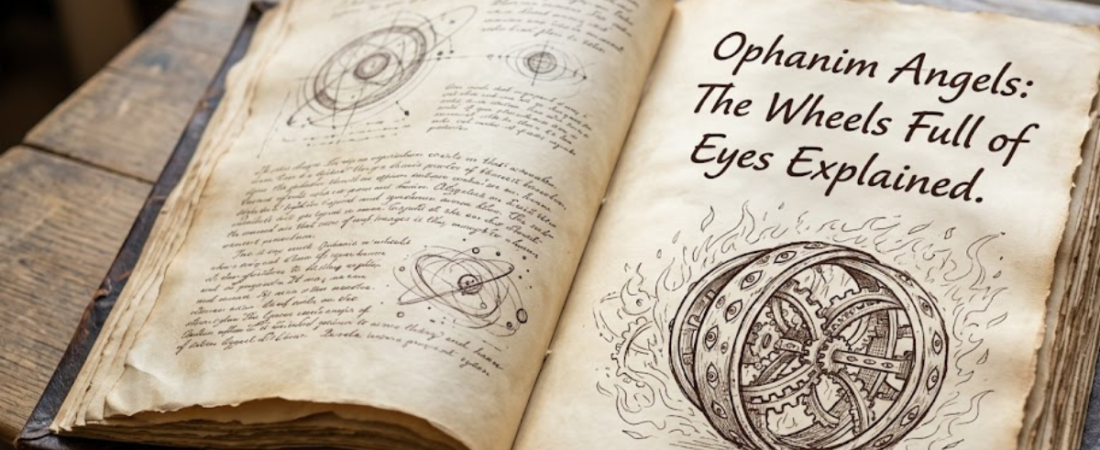
Few biblical beings have sparked as much fascination as ophanim angels. Unlike the familiar image of winged guardians dressed in white robes, these mysterious heavenly beings appear as gigantic wheels covered in eyes, moving with supernatural precision beside God’s throne. Their unusual appearance has inspired centuries of religious debate, artwork, and modern internet curiosity.
So, what are ophanim angels exactly? Are they symbolic creatures, literal heavenly beings, or part of a prophetic vision meant to communicate something deeper? To answer those questions, we need to look closely at the Bible, Jewish mysticism, and the rich symbolism surrounding these extraordinary celestial entities.
What Are Ophanim Angels?
The term “Ophanim” comes from the Hebrew word ophan, meaning “wheel.” In ancient Jewish tradition, the ophanim are a class of angels associated with divine movement, cosmic order, and God’s heavenly chariot.
Most people know them through the vivid vision described in the Book of Ezekiel. In this passage, the prophet witnesses enormous intersecting wheels filled with eyes moving alongside living creatures near the throne of God. Over time, theologians identified these wheels as a unique angelic order.
Unlike cherubim or seraphim, the ophanim are not described with human-like features. Their strange form is precisely what makes them one of the most intriguing beings in biblical literature.
Ophanim Angels in the Bible
The primary source for understanding ophanim angels in the Bible comes from Ezekiel chapters 1 and 10.
Ezekiel describes seeing:
- Wheels intersecting within wheels
- Rims covered completely with eyes
- Wheels moving in perfect harmony with heavenly creatures
- Fire, lightning, and radiant light surrounding them
The imagery is overwhelming and symbolic. According to the text, the wheels could move in any direction without turning, suggesting limitless motion and divine intelligence.
The Vision of Ezekiel
The prophet Ezekiel lived during the Babylonian exile around the 6th century BCE. During this turbulent time, he experienced powerful visions meant to reveal God’s sovereignty even in chaos.
The famous ophanim angels description Bible Ezekiel passage says the wheels were “full of eyes all around.” This detail has fascinated scholars for centuries because eyes in biblical symbolism often represent awareness, wisdom, and divine perception.
Rather than appearing as peaceful guardian angels, the ophanim embody something far more cosmic and awe-inspiring.
What Do Ophanim Angels Do?
One of the most searched questions online is: what do ophanim angels do?
In traditional interpretations, the ophanim serve several important functions:
1. Carrying the Divine Throne
The ophanim are closely connected to God’s heavenly chariot, sometimes called the Merkabah. Their movement symbolizes the active presence of God throughout creation.
2. Representing Divine Awareness
Because the wheels are covered in eyes, many theologians interpret them as symbols of God’s all-seeing knowledge.
3. Maintaining Cosmic Order
Jewish mystical traditions often portray the ophanim as guardians of universal balance and heavenly structure.
4. Assisting Higher Angelic Orders
In some angelic hierarchies, the ophanim work alongside cherubim and seraphim near the throne of God.
The imagery suggests constant motion, intelligence, and obedience to divine will.
The Symbolism Behind the Wheels Full of Eyes
The phrase “wheels full of eyes” is one of the most iconic descriptions in religious literature. Modern searches for ophanim angels wheels full of eyes biblical art and related illustrations show how deeply this imagery captures the imagination.
But what do these symbols actually mean?
Eyes as Divine Knowledge
Throughout scripture, eyes often symbolize:
- Awareness
- Wisdom
- Judgment
- Spiritual perception
The countless eyes on the ophanim may represent total awareness of creation.
Wheels as Movement and Eternity
Wheels symbolize motion, cycles, and continuity. In the biblical context, they may represent:
- God’s presence everywhere
- The unstoppable nature of divine purpose
- Eternal cosmic order
Together, the wheels and eyes create an image of perfect heavenly intelligence in motion.
How Big Are Ophanim Angels?
The Bible never gives exact measurements, but Ezekiel’s description suggests they were enormous and terrifying in scale.
Many scholars believe the prophet intentionally described them as overwhelming to communicate the majesty of God’s realm. Artistic interpretations often portray the ophanim as towering structures of light and fire, large enough to support a divine throne.
Because the text mentions wheels reaching “upward” and inspiring fear, most interpretations imagine them as colossal celestial beings rather than small angelic figures.
Are Ophanim Angels Real?
Another common question is: are ophanim angels real?
The answer depends largely on religious belief and interpretation.
Literal Interpretation
Some believers view the ophanim as actual heavenly beings that exist within the spiritual realm.
Symbolic Interpretation
Others believe Ezekiel’s vision was symbolic, using vivid imagery to describe divine truths that human language struggles to capture.
Mystical Interpretation
In Jewish mysticism, particularly Merkavah tradition and Kabbalah, the ophanim are considered part of a complex spiritual hierarchy surrounding God’s throne.
Regardless of interpretation, the ophanim remain one of the most important symbolic angelic figures in religious history.
The Ophanim in Jewish Mysticism
The ophanim became especially significant in early Jewish mysticism.
Mystics focused intensely on Ezekiel’s throne vision, developing traditions about heavenly realms and angelic orders. In these teachings, the ophanim are often associated with:
- Sacred movement
- Celestial knowledge
- Divine judgment
- Spiritual purification
Some mystical texts describe them as beings of burning fire and thunderous sound continuously praising God.
This mystical tradition heavily influenced later Christian angelology as well.
Ophanim Angels in Art and Popular Culture
Searches for ophanim angels wheels full of eyes art and illustrations have exploded online in recent years. Artists are drawn to the surreal and almost cosmic-horror appearance of these beings.
Modern depictions often combine:
- Interlocking golden wheels
- Hundreds of glowing eyes
- Rings of fire
- Cosmic backgrounds
- Abstract geometric patterns
The contrast between traditional angel imagery and the bizarre appearance of the ophanim has made them popular in fantasy art, gaming, anime, and internet discussions about “biblically accurate angels.”
Still, many artistic interpretations simplify or exaggerate the original biblical descriptions for dramatic effect.
Difference Between Ophanim, Cherubim, and Seraphim
People often confuse these angelic beings because they all appear near God’s throne.
Here’s the general distinction:
Ophanim
- Wheel-like beings
- Covered in eyes
- Associated with movement and divine order
Cherubim
- Winged throne guardians
- Often linked with wisdom and protection
- Appear throughout the Old Testament
Seraphim
- Fiery heavenly beings
- Six-winged angels
- Constantly worship God
Together, they form part of the highest heavenly hierarchy in many religious traditions.
Why Are Ophanim Angels So Popular Today?
Interest in the ophanim has surged online because their appearance feels so unexpected compared to modern portrayals of angels.
Several factors contribute to their popularity:
- Viral discussions about “biblically accurate angels”
- Fascination with strange ancient symbolism
- Social media art trends
- Interest in mysticism and hidden biblical lore
Their design also resonates with modern audiences because it feels mysterious, cosmic, and almost otherworldly in a science-fiction sense.
FAQs About Ophanim Angels
Who are the ophanim angels?
The ophanim are a class of heavenly beings associated with the divine throne in biblical and Jewish mystical traditions. They are commonly described as wheels covered in eyes.
What do ophanim angels do?
They are believed to support God’s heavenly chariot, symbolize divine awareness, and maintain cosmic order.
Where are ophanim angels mentioned in the Bible?
They are primarily described in Ezekiel chapters 1 and 10.
Why do ophanim angels have eyes?
The eyes are commonly interpreted as symbols of divine knowledge, awareness, and spiritual perception.
Are ophanim angels terrifying?
Biblical descriptions emphasize their overwhelming and awe-inspiring appearance rather than gentleness or comfort.
How are ophanim different from regular angels?
Unlike human-like angels, ophanim appear as massive intersecting wheels filled with eyes and surrounded by divine fire.
Are ophanim angels part of Christianity?
Yes. Although rooted in Jewish scripture, ophanim became part of Christian angelology and medieval theological traditions.
Conclusion
The fascination with ophanim angels comes from their deeply mysterious nature. They challenge the modern image of angels as gentle winged figures and instead reveal something vast, symbolic, and almost beyond human understanding.
Whether viewed literally, symbolically, or mystically, the ophanim represent divine movement, awareness, and heavenly order. Their strange appearance as wheels full of eyes has inspired theologians, artists, and curious readers for centuries.
As interest in biblical symbolism continues to grow, the ophanim remain one of the most unforgettable examples of how ancient spiritual texts used vivid imagery to express realities beyond ordinary human experience.