When people think about angels, they often picture glowing beings with wings and halos. But the Bible describes some heavenly creatures in a far more mysterious and awe-inspiring way. Among the most fascinating are seraphim angels — fiery celestial beings that stand close to God’s throne and worship Him continuously.
The topic of seraphim angels has fascinated theologians, artists, collectors, and spiritual seekers for centuries. From ancient scripture to modern art, these heavenly beings continue to inspire curiosity. In this guide, we’ll explore what seraphim angels in the Bible really are, what they look like, what they do, and why they remain such an important part of spiritual tradition.
What Are Seraphim Angels?
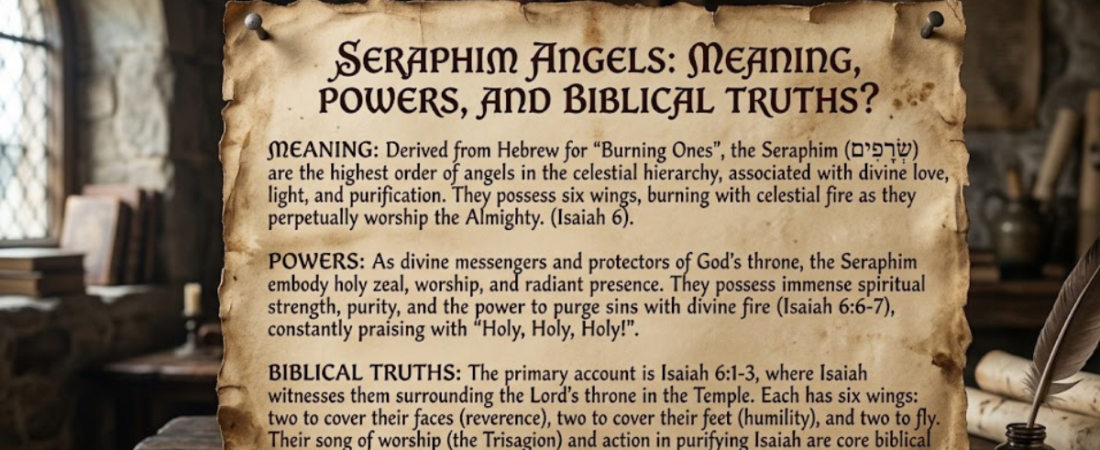
Seraphim angels are considered one of the highest orders of angels in biblical tradition. The word “seraphim” comes from a Hebrew term meaning “burning ones,” which reflects their fiery and radiant nature.
Unlike common depictions of human-like angels, seraphim are supernatural beings associated with purity, worship, and divine holiness. They are most famously mentioned in the Book of Isaiah, where the prophet describes a powerful vision of heaven.
In many religious traditions, seraphim are believed to:
- Worship God constantly
- Guard divine holiness
- Purify human souls
- Serve near the throne of heaven
- Represent burning love and spiritual light
Because of their closeness to God, they are often viewed as the highest-ranking heavenly beings.
Seraphim Angels in the Bible
The clearest biblical description appears in Isaiah 6:1–7. In this vision, the prophet Isaiah sees the Lord seated on a throne surrounded by seraphim.
The passage explains that each seraph had six wings:
- Two wings covered the face
- Two covered the feet
- Two were used for flying
These six winged seraphim angels cried out:
“Holy, holy, holy is the Lord Almighty.”
This scene is one of the most powerful moments in the Old Testament because it emphasizes God’s holiness and majesty.
Why Are the Six Wings Important?
The wings symbolize humility, reverence, and readiness to serve.
- Covering the face shows respect before God’s glory
- Covering the feet represents humility
- Flying symbolizes action and obedience
This imagery helped shape later interpretations of angelic hierarchies in Christianity and Judaism.
What Do Seraphim Angels Look Like?
One of the most searched questions online is: what do seraphim angels look like?
The Bible’s description is far different from the soft, human-like angels seen in paintings or greeting cards. Seraphim angels appearance is often described as:
- Fiery or glowing
- Surrounded by divine light
- Possessing six wings
- Existing near heavenly flames
- Awe-inspiring and overwhelming
Some religious scholars also associate them with living fire because the Hebrew word for seraphim is linked to burning or flame.
Over time, artists imagined them in different ways. Some portray them as winged humans, while others create more symbolic depictions with multiple eyes, radiant energy, or celestial fire.
What Do Seraphim Angels Do?
Many people wonder: what do seraphim angels do?
According to scripture and theological interpretation, their primary role is worship and purification. They are not typically portrayed as guardian angels assigned to individuals. Instead, they serve directly in God’s heavenly presence.
Their responsibilities include:
1. Worshiping God
The seraphim continually praise God’s holiness. Their worship symbolizes eternal devotion.
2. Purifying Souls
In Isaiah’s vision, one seraph touches Isaiah’s lips with a burning coal to cleanse him from sin. This act represents spiritual purification.
3. Carrying Divine Presence
Seraphim are often associated with heavenly fire, which symbolizes God’s glory and power.
4. Reflecting Divine Holiness
Their constant presence around God’s throne highlights the sacredness of heaven.
Seraphim vs Cherubim: What’s the Difference?
People frequently confuse cherubim seraphim angels because both appear in biblical texts. However, they have distinct roles.
Cherubim
Cherubim are often guardians of sacred places. In Genesis, cherubim guard the entrance to the Garden of Eden.
Seraphim
Seraphim focus primarily on worship, holiness, and purification.
Another major difference lies in appearance. Cherubim are described with multiple faces and unusual forms in Ezekiel’s visions, while seraphim are mainly recognized for their six wings and fiery presence.
Seraphim Angels Names
Unlike archangels such as Michael or Gabriel, the Bible does not specifically list seraphim angels names. This has led to centuries of speculation and interpretation.
Some later religious writings and mystical traditions attempt to assign names to heavenly beings connected with the seraphim order, but these are not directly confirmed in scripture.
For this reason, most biblical scholars avoid claiming definite names for individual seraphim.
The Symbolism of Seraphim Angels
Seraphim represent more than heavenly creatures. They carry deep symbolic meaning.
Fire and Purity
Their fiery nature symbolizes cleansing, transformation, and divine energy.
Holiness
The repeated declaration of “holy, holy, holy” emphasizes God’s perfection.
Spiritual Devotion
Their endless worship reflects complete dedication to the divine.
Because of these themes, seraphim have become powerful symbols in religious art, tattoos, and spiritual teachings.
Seraphim Angels Tattoo Meaning
Interest in the seraphim angels tattoo trend has grown significantly in recent years. Many people choose these designs because they symbolize:
- Spiritual awakening
- Protection
- Purity
- Divine connection
- Faith and transformation
Tattoo artists often incorporate six wings, flames, halos, or glowing eyes into their designs to capture the mystical nature of seraphim.
Some people prefer realistic religious artwork, while others choose abstract or gothic styles inspired by biblical imagery.
Seraphim Angels Figurines and Collectibles
Outside theology, seraphim angels figurines have become highly popular collectibles. Decorative angel statues and ornaments are often displayed in homes during holidays or used as spiritual décor.
One of the most recognized brands in this category is seraphim angels by Roman.
Roman Seraphim Angels
Roman seraphim angels are collectible figurines produced by Roman Inc., a company known for religious gifts and decorative angel collections. These figures often feature detailed craftsmanship, flowing robes, and peaceful expressions.
Collectors appreciate them for:
- Artistic detail
- Spiritual symbolism
- Seasonal décor
- Sentimental value
The seraphim angels collection from Roman became especially popular among angel figurine enthusiasts in the late 1990s and early 2000s.
Value of Seraphim Angels by Roman
The value of seraphim angels by Roman depends on several factors:
- Condition
- Rarity
- Original packaging
- Limited editions
- Collector demand
Some retired figurines can become more valuable over time, especially among dedicated collectors.
Are Seraphim Angels Real?
The question “are seraphim angels real” depends largely on personal belief and religious perspective.
For believers, seraphim are genuine heavenly beings described in scripture. For others, they may represent symbolic spiritual concepts such as purity, holiness, or divine mystery.
Throughout history, these beings have inspired art, worship, literature, and theology across multiple faith traditions.
Seraphim Angels in Art and Culture
The image of the seraphim has evolved over centuries.
During the Renaissance, painters often depicted them as beautiful winged beings surrounded by golden light. In modern culture, they appear in:
- Religious artwork
- Fantasy literature
- Video games
- Films
- Spiritual symbolism
- Decorative statues
This blend of biblical imagery and artistic interpretation keeps interest in the seraphim alive today.
Why People Remain Fascinated by Seraphim
There’s something deeply compelling about beings that exist so close to divine power. The seraphim angels symbolize mystery, reverence, purity, and heavenly beauty.
People are drawn to them because they combine:
- Spiritual significance
- Stunning imagery
- Ancient biblical roots
- Powerful symbolism
Whether viewed through faith, art, or history, they continue to inspire wonder.
FAQs About Seraphim Angels
What are seraphim angels?
Seraphim angels are heavenly beings described in the Bible as fiery six-winged creatures who worship God and serve near His throne.
Where are seraphim mentioned in the Bible?
They are mainly described in Isaiah chapter 6 during the prophet Isaiah’s vision of heaven.
What do seraphim angels look like?
They are traditionally described as glowing or fiery beings with six wings. Their appearance symbolizes holiness and divine power.
What do seraphim angels do?
They worship God continuously, proclaim His holiness, and participate in acts of spiritual purification.
Are seraphim higher than cherubim?
In many Christian traditions, seraphim are considered one of the highest angelic orders, often placed above cherubim.
Do seraphim angels have names?
The Bible does not provide specific names for seraphim angels.
Why are seraphim associated with fire?
The Hebrew origin of the word “seraphim” means “burning ones,” linking them to divine fire and purification.
What are seraphim angels figurines?
These are decorative collectibles inspired by angelic imagery, often used for spiritual décor or collecting.
What is the meaning behind a seraphim angels tattoo?
Such tattoos usually symbolize holiness, transformation, divine protection, or spiritual devotion.
Conclusion
Seraphim angels remain among the most mysterious and powerful beings described in scripture. Their six wings, fiery presence, and eternal worship make them unique in biblical tradition. Far from the soft angel imagery common today, the seraphim represent divine holiness, purification, and awe-inspiring spiritual power.
Whether you’re researching seraphim angels in the Bible, exploring their symbolism, collecting figurines, or considering artistic interpretations, these celestial beings continue to capture human imagination across generations.
Their story reminds us that some mysteries are meant not only to be understood, but also to inspire wonder.